
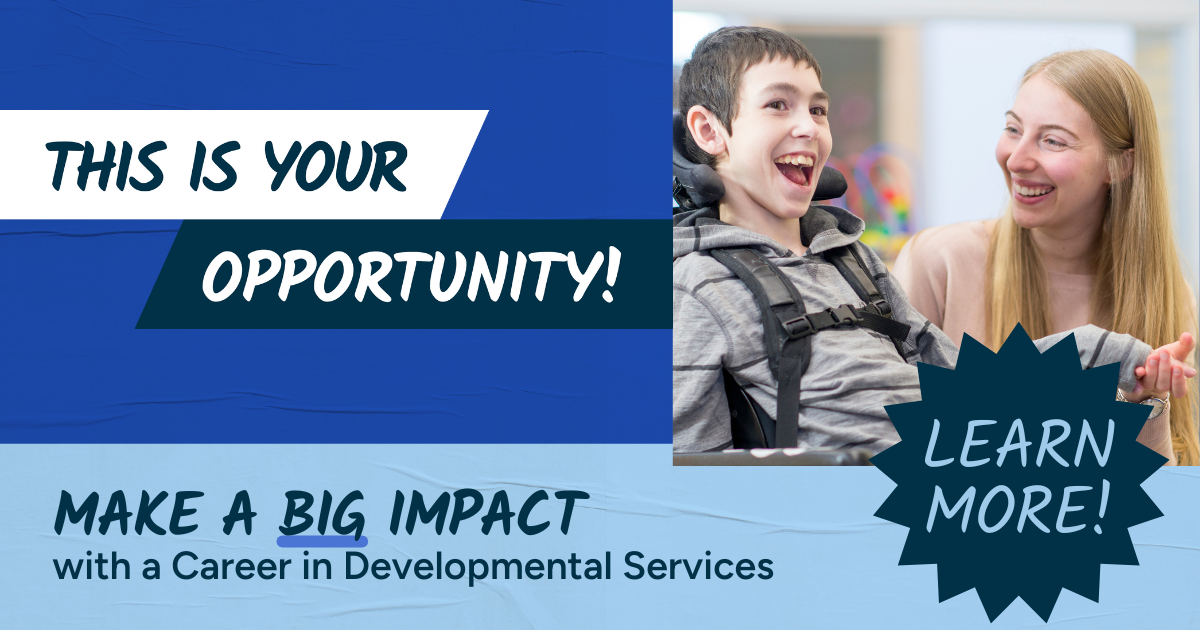
Are you thinking about a career in developmental services? Want to learn more about training and educational opportunities, job opportunities or what agencies and families are looking for? You’ve come to the right spot.
What Education Do I need?
If you are in High School, you can:
- Enroll in foundational courses like psychology, human development, special education, etc.
- Gain experience and find interests (specializations) by volunteering or part-time work.
- Participate in arco-op placements with organizations that support individuals with Developmental Disabilities. Check with your school’s guidance counsellor on locations near you or click the link below
- Unsure? Talk to your school’s guidance counselor.
You can find more information here.
Apprenticeship Program
- Taking your career to the next level through the Developmental Services Worker (DSW) Apprenticeship Program which allows you to earn an income while also earning your credentials.
- Best-suited for folks already working in the DS sector (who don’t have a diploma or degree), for students looking for continued education, and folks looking to make a career change!
Find opportunities here
A Job With A Developmental Service Agency
Depending on where you are in the province, there are careers with agencies: agencies provide a variety of supports to people with a developmental disability and their families – supports can be different in different regions. Frontline jobs can include:
What Skills Do I Need?
There is a wide range of skills that agencies and families look for when hiring a Direct Support Professional. Some skills are specific to a person’s support needs and can be taught on-the-job. A commitment to inclusion and a belief that everyone deserves a normal life are the most important attributes a person brings to their job.
Others, like Core Competencies make up the key skillset that is demonstrated by professionals in the Developmental Services sector. They are the values and behaviours that translate to superior job performance and result in the best possible support for people with developmental disabilities. In Developmental Services, we have identified 10:
- Advocacy
- Building Relationships
- Championing Change and Innovation
- Facilitating Growth and Development
- Inclusive Leadership
- Problem Solving & Decision Making
- Resilience
- Resource Management
- Strategic Thinking
- Valuing Equity, Diversity, and Inclusion (EDI)
What Kind of Career Can I Have?
There’s so much room for growth within the sector! Careers can take many shapes, and people with a range of skills and aspirations can find a home in the Developmental Services sector.
If you are looking to work for an agency, here are some of the typical roles that make up the workforce:
- Direct Support
- Administrative Support
- Program Coordinator
- Case Manager
- Service Navigator
- Operational Leader
- Senior Leader
Some organizations might also have:
- Family Support Coordinators
- Early Childhood Workers
- Respite Workers,
Some agencies may have specialized roles such as:
- Behaviour Therapists
- Volunteer Coordinators
- Communications and Marketing roles
- Occupational Therapists.
Some Direct Support Professionals may decide to work directly for families and start their own businesses. Self-employed contractor can take the shape of:
- Facilitators
- 1:1 Direct support workers
- Life Planning
- Microboard Facilitators
Find the job that’s right for you here.
We’ve compiled some information you may find useful while considering a career that matters
– High School
- Enroll in foundational courses like psychology, human development, special education, etc.
- Gain experience and find interests (specializations) through volunteerism, part-time work, or co-op placements with organizations that support individuals with Developmental Disabilities.
- Get support from your school’s guidance counselor.
Find opportunities here.
– Post-Secondary
- Research all of your options and consider applying to the schools (colleges and universities) that offer diplomas or degrees in Human Services.
- An education that specializes in Developmental Disabilities (i.e. Disability Studies, Developmental Services Worker, etc.) is an asset.
- Taking elective courses that focus on key topics like Diversity, Equity, Inclusion, and Accessibility (DEIA), Community Building, or Social Inclusion can help better your understanding of the sector AND make you a standout candidate for recruiters.
Find college programs here
Find university programs here
– Work-To-Learn
- Taking your career to the next level through the Developmental Services Worker (DSW) Apprenticeship Program which allows you to earn an income while also earning your credentials.
- Best-suited for folks already working in the DS sector (who don’t have a diploma or degree), for students looking for continued education, and folks looking to make a career change!
Find opportunities here
Core Competencies make up the key skillset that is demonstrated by professionals in the Developmental Services sector. They are the values and behaviours that translate to superior job performance and result in the best possible support for people with developmental disabilities.
- Advocacy
- Building Relationships
- Championing Change and Innovation
- Facilitating Growth and Development
- Inclusive Leadership
- Problem Solving & Decision Making
- Resilience
- Resource Management
- Strategic Thinking
- Valuing Equity, Diversity, and Inclusion (EDI)
There’s so much room for growth within the sector!
Here are some of the typical roles that make up the workforce of a DS organization:
- Direct Support
- Administrative Support
- Program Coordinator
- Case Manager
- Service Navigator
- Operational Leader
- Senior Leader
Find the job that’s right for you here.
